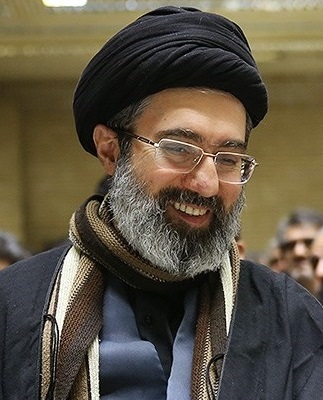
Mojtaba Khamenei: Unpacking the Enigma of Iran's Cleric Son and Potential Successor
In the intricate tapestry of Iranian politics, few figures command as much whispered speculation as Mojtaba Hosseini Khamenei. As the second eldest child of Iran's long-serving Supreme Leader, Ayatollah Ali Khamenei, Mojtaba's name frequently arises in discussions about the nation's future leadership. Often referred to colloquially as "chamenei sohn" in online discourse, his journey from a war veteran to an influential cleric and alleged power broker positions him as a pivotal, albeit often opaque, personality within the Islamic Republic.
Understanding Mojtaba Khamenei is crucial to comprehending the potential trajectories of Iranian governance. His public profile remains relatively low, yet his behind-the-scenes influence is widely acknowledged, painting a picture of a man meticulously groomed, or at least strategically positioned, for a role of immense national and regional significance. This article delves into his background, his alleged roles in moments of national crisis, and the profound implications of his potential ascent to the highest office in Iran.
The Formative Years: War, Clerical Path, and Emerging Influence
Born on 8 September 1969, Mojtaba Khamenei came of age during a tumultuous period in Iran's modern history. The devastating Iran-Iraq War, a conflict that shaped an entire generation, saw a young Mojtaba serve on the front lines from 1987 to 1988. This military experience is not merely a biographical detail; it imbues him with a crucial layer of legitimacy and revolutionary credentials within the Islamic Republic's framework, appealing to a segment of the population that reveres sacrifices made during that conflict.
Following his military service, Mojtaba pursued a rigorous religious education, ascending through the ranks of the clerical establishment. He studied under prominent figures, including his own father, Ali Khamenei, and other senior clerics, solidifying his theological credentials and building a network within the Qom seminaries. This dual background – a war veteran and a respected cleric – provides him with a powerful combination of spiritual authority and practical, albeit often unstated, political acumen. His quiet ascent within the clerical hierarchy has fueled the narrative around him being a serious contender, an influential chamenei sohn.
Key Insight: In Iran, leadership often requires a synthesis of revolutionary zeal, military experience, and religious scholarship. Mojtaba's profile ticks many of these boxes, making him a compelling candidate in the eyes of the establishment.
The Basij Connection and the 2009 Protests: A Test of Power
One of the most defining, and controversial, periods in Mojtaba Khamenei's alleged career concerns his reported involvement with the Basij paramilitary force. The Basij, a volunteer militia under the command of the Islamic Revolutionary Guard Corps (IRGC), plays a critical role in internal security and the suppression of dissent. During the widespread protests that erupted following the disputed 2009 presidential election, Mojtaba Khamenei was reportedly instrumental in taking control of the Basij to quell the demonstrations.
This alleged role is significant for several reasons. Firstly, it indicates a direct involvement in the enforcement of the regime's authority, demonstrating a willingness to use force to maintain stability. Secondly, it suggests a close working relationship with powerful security apparatuses like the IRGC and Basij, crucial for any leader in Iran. His alleged actions during this volatile period cemented his image, for some, as a protector of the revolution, and for others, as an enforcer of authoritarian rule. This moment arguably solidified his position as an influential Khamenei's Son: Power & Protests in Iran, capable of wielding significant power during a national crisis.
Understanding the Dynamics: The Basij's role is not just about physical control; it's also about ideological policing and grassroots mobilization. A leader with influence over this force commands a vast network that can be deployed for political, social, or security objectives.
A Son's Shadow: Mojtaba Khamenei's Growing Influence and the Succession Question
Over the years, Mojtaba's influence within the corridors of power has reportedly grown exponentially. He is widely considered the most influential of Ali Khamenei's sons, playing a significant, albeit often unconfirmed, role in his father's office and in key political decisions. This close proximity to the Supreme Leader, coupled with his own credentials, naturally places him at the forefront of discussions regarding succession.
The question of who will succeed Ayatollah Ali Khamenei is arguably the most critical and sensitive political issue facing Iran. The Supreme Leader, a position held for life, wields ultimate authority over all major state matters. While the Assembly of Experts is constitutionally tasked with selecting the next leader, the reality of Iranian politics involves extensive lobbying, behind-the-scenes maneuvering, and the consolidation of support among powerful factions. In this landscape, a chamenei sohn with a robust clerical background, revolutionary credentials, and ties to security forces presents a formidable, if controversial, option.
Speculation intensifies when considering the potential for a dynastic succession, a concept generally viewed with skepticism within the revolutionary ethos of the Islamic Republic, which prides itself on rejecting monarchical rule. However, the precedent of influential clerical families, coupled with Mojtaba's personal qualifications, makes his candidacy a unique and complex proposition. His perceived role as an enforcer and a steadfast loyalist to the current system could be both his greatest strength and his greatest liability, depending on the prevailing political climate. Further insights into his potential path are explored in Inside Mojtaba Khamenei's Path to Supreme Leadership.
Navigating Iran's Future: Perspectives on Leadership and Change
The prospect of Mojtaba Khamenei as Iran's next Supreme Leader elicits a wide range of reactions both inside and outside the country. Domestically, while some within the establishment might see him as a reliable continuity figure, others, particularly those who have felt the weight of state suppression, might view his potential ascent with trepidation. Globally, his leadership would be closely scrutinized for its implications on Iran's foreign policy, its nuclear ambitions, and regional stability.
Discussions about Iran's future leadership often intersect with broader debates about the country's direction and the role of external forces. Protests highlighting the human cost of conflict and the desire for self-determination offer a glimpse into the complexities facing any future Iranian leader. For instance, discussions among anti-war activists in places like Tucson, Arizona, reveal deep concerns about foreign military engagement and sanctions, arguing that such actions rarely benefit ordinary citizens. Activists like Maria Sohn Hasman from the Tucson Anti-War Committee emphasize that resources spent on military actions abroad often come at the expense of domestic needs, leading to struggles for housing and basic necessities.
Conversely, voices from the Iranian diaspora, like David Najari, who experienced life under the current regime, often express hopes for fundamental democratic change. Najari speaks of an "evil time" where Iranians "could not voice their slightest differences from the government," envisioning a future where Iran's destiny is determined "at the ballot box." These contrasting perspectives underscore the immense challenges and differing expectations that Mojtaba Khamenei, or any successor, would face. A new leader would inherit a nation grappling with economic pressures, social demands for greater freedoms, and a complex geopolitical landscape.
Factors to Watch:
- Internal Consensus: Does Mojtaba have sufficient support among the Assembly of Experts, the IRGC, and other powerful clerical and political factions?
- Public Acceptance: How would the general populace react to a perceived dynastic succession, particularly younger generations yearning for change?
- Regional Impact: How would his leadership influence Iran's relationships with its neighbors and its role in regional conflicts?
- International Relations: What would his stance be on the nuclear deal, relations with the West, and geopolitical rivalries?
Conclusion
Mojtaba Hosseini Khamenei remains a figure shrouded in a degree of mystery, yet undeniably influential. From his service in the Iran-Iraq War to his alleged role in quelling dissent and his close proximity to the Supreme Leader, the narrative around this "chamenei sohn" paints a picture of a powerful and meticulously prepared individual. As Iran navigates its future, the question of succession looms large, and Mojtaba Khamenei's name will undoubtedly continue to be central to these discussions. His potential leadership would not only determine the internal trajectory of the Islamic Republic but also profoundly shape its interactions with the Middle East and the world, making him a figure whose every move is watched with intense scrutiny by allies and adversaries alike.